
Misty Copeland is one of the most celebrated ballet dancers of the 21st century, known for breaking racial barriers and redefining what a ballerina can look like. In 2015, she became the first African American woman promoted to principal dancer in the 75-year history of the American Ballet Theatre (ABT). Her story of overcoming poverty, instability, and industry bias has made her a global role model. This article explores her journey, focusing on Misty Copeland biography, Misty Copeland childhood, and Misty Copeland net worth.
Misty Copeland Biography Early Life and Discovery
Misty Danielle Copeland was born on September 10, 1982, in Kansas City, Missouri, and raised in San Pedro, California. She is the youngest of six children in a single-parent household. Her mother struggled with financial instability, and the family often moved between temporary housing, including motels, when money ran out.
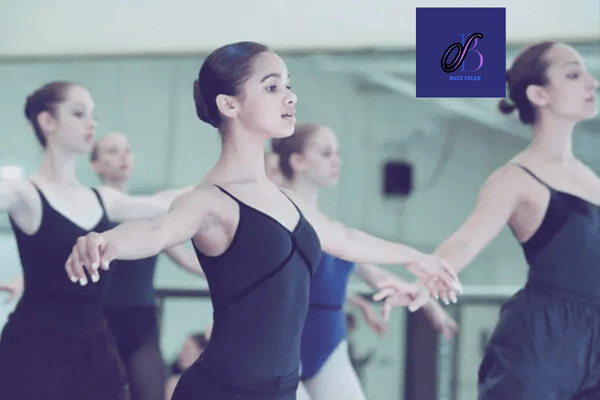
Unlike most professional dancers who begin training between ages 4 and 6, Copeland did not start ballet until she was 13 an unusually late age in the ballet world. She took her first class at a Boys & Girls Club in San Pedro, where a volunteer teacher noticed her natural strength, flexibility, and musicality. Within just three months, she was dancing en pointe, a skill that typically takes years to develop.
Her first instructor, Cynthia Bradley, recognized Copeland’s extraordinary potential and began teaching her privately in a small garage studio. By age 15, Copeland had won first place in the Music Center Spotlight Awards and earned scholarships to prestigious programs, including the San Francisco Ballet School and ABT’s Summer Intensive.
Misty Copeland Childhood Hardship and Resilience
Misty Copeland childhood was marked by significant challenges. Growing up with five siblings and a single mother, she experienced periods of homelessness and food insecurity. In a 2025 interview with The New York Times, she described her youth as a time of constant uncertainty: “I would go from day to day, night to night not knowing where we were sleeping, not knowing if we were going to have food, not knowing how I was going to get to school, if I was going to school.”
At 15, Copeland became the center of a highly publicized custody battle between her mother and her ballet teachers, who sought to provide her with a stable environment to continue training. The emotional toll led her to temporarily stop dancing. Despite these obstacles, she returned to ballet with renewed determination, eventually joining ABT’s Studio Company in 2000.
Rise Through American Ballet Theatre
Copeland joined American Ballet Theatre as a member of the corps de ballet in April 2001. She was promoted to soloist in August 2007, becoming the company’s second African American female soloist and the first in two decades. Her breakthrough came in June 2015, when she was elevated to principal dancer the first Black woman to achieve this rank in ABT’s 75-year history.
Throughout her career, Copeland faced criticism about her physique, with some in the ballet world claiming her body was “too muscular” or her skin “too dark” for traditional roles. Rather than conform, she used her platform to challenge narrow beauty standards and advocate for greater diversity in classical dance.
Retirement and Legacy
After 25 years as a professional dancer, Copeland announced her retirement in 2025. She performed her final gala with ABT on October 22, 2025, at Lincoln Center, dancing through a deteriorating hip that was surgically replaced weeks later. While stepping away from full-time performance, she has stated she is “never saying never” to returning to the stage.
In 2022, she founded the Misty Copeland Foundation to provide ballet programs, mentorship, and resources for underserved youth. She has also launched Life in Motion Productions and remains active as an author, speaker, and advocate for diversity in the arts.
Check now For more information.

Misty Copeland Net Worth in 2026
As of 2026, Misty Copeland net worth is estimated between $3 million and $5 million, according to multiple sources. Some outlets report lower figures, around $1.5 million, but most place her wealth in the $3–5 million range.
Her income comes from several sources:
- Ballet salary: As a principal dancer with ABT, Copeland earned a substantial salary, though exact figures are not publicly disclosed
- Book deals: She is the author of multiple bestselling books, including her memoir Life in Motion and children’s books such as Ballerina Body and Firebird.
- Brand partnerships: Copeland has collaborated with major brands including Under Armour, Puma, and others, leveraging her status as a cultural icon.
- Speaking and media: She earns fees for speaking engagements, television appearances, and producing content through her production company.
While her net worth is modest compared to some celebrities, it reflects a successful transition from dancer to entrepreneur and advocate.
Breaking Barriers in Ballet
Copeland’s impact extends beyond her technical skill. She has spoken openly about facing racism and body-shaming in the ballet world, using her platform to push for change. Her visibility has inspired a new generation of dancers of color, many of whom now see ballet as an accessible art form.
In interviews, she has emphasized the importance of representation, noting that seeing a Black ballerina on stage can transform a child’s sense of possibility. Her advocacy has helped ABT and other companies broaden their outreach and casting practices.
Personal Life and Public Image
Copeland married writer and attorney Solomon Walk in 2016. The couple has spoken about their shared commitment to social justice and the arts. She maintains an active presence on social media, where she shares training tips, behind-the-scenes content, and messages of empowerment.
Her public image blends athleticism, artistry, and activism. She has appeared in music videos, on Broadway, and in film, expanding the reach of ballet to mainstream audiences.
Final Thoughts
Misty Copeland’s story is a testament to resilience, talent, and the power of breaking barriers. From a childhood marked by instability to the pinnacle of classical dance, she has redefined what it means to be a ballerina.
For those searching for Misty Copeland biography, her journey from a late-starting teenager in San Pedro to ABT’s first Black female principal dancer stands as one of the most inspiring narratives in modern dance. Her Misty Copeland childhood, filled with hardship and uncertainty, only deepens the significance of her achievements.